
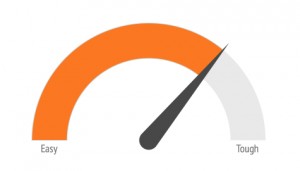
 In a previous post, I complained that a game I was playing should have adapted the difficulty level of a mission after I’d failed it many times. I know, of course, that building in such smarts would require significant effort. I was wondering about how to make the process easier, and then I realized we already have the answer: the difficulty setting. That’s the slider or check boxes we often see at the start of a game that ask us if we want it set to “easy,” “medium,” or “hard.”
I have publicly opposed the idea of a difficulty setting several times. But now I realize that my objections weren’t to the concept itself, but to how and when it was presented. I believe now that a freely-adjustable difficulty setting is an elegant and simple mechanism for preventing the kind of frustration I was experiencing. I now think that a difficulty setting, handled properly, is a very good idea.
 “Hello, player! You’ve failed at finishing this task within our time limit ten times in a row now. Are you still having fun? If yes, press A and keep trying. Otherwise, press B and we’ll remove the time limit. Or press X just to mark this as done and move on in the game.”